Sand Cast Components
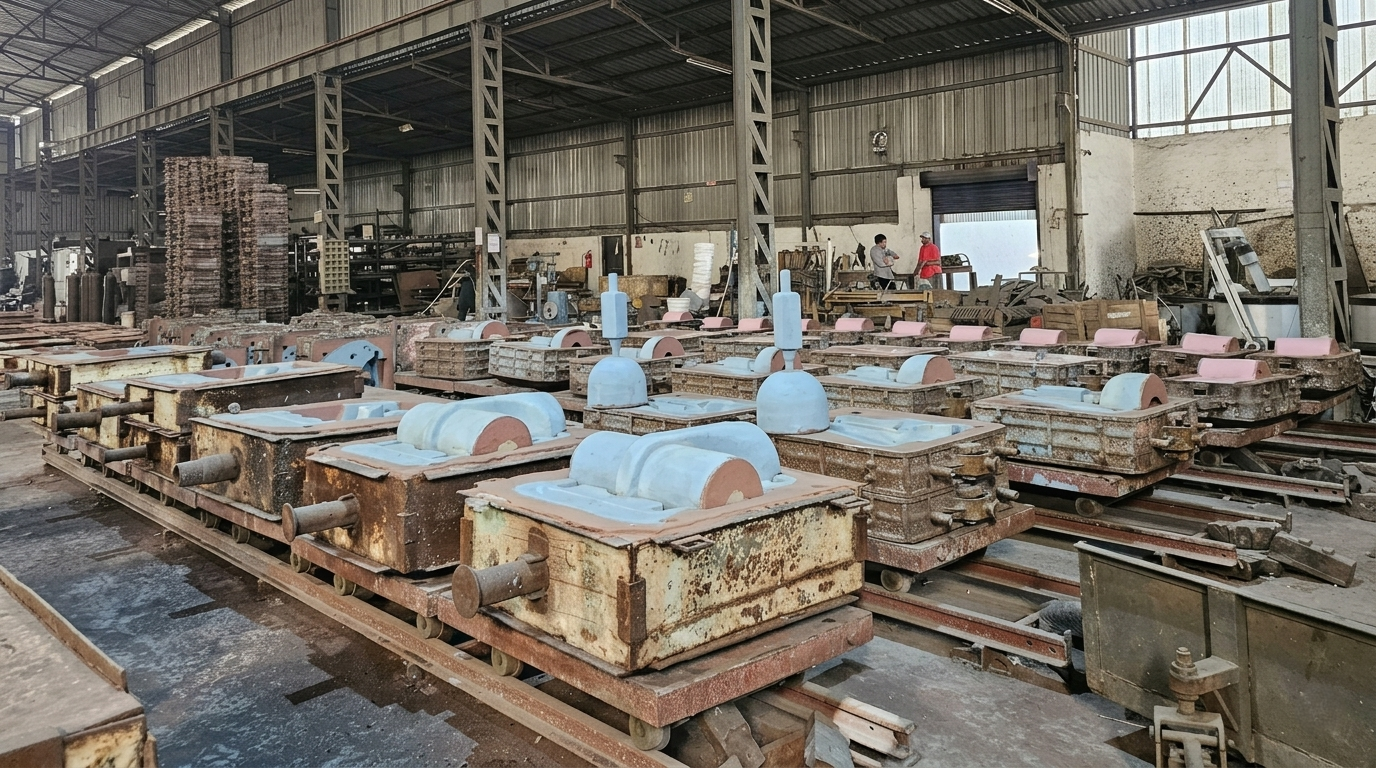
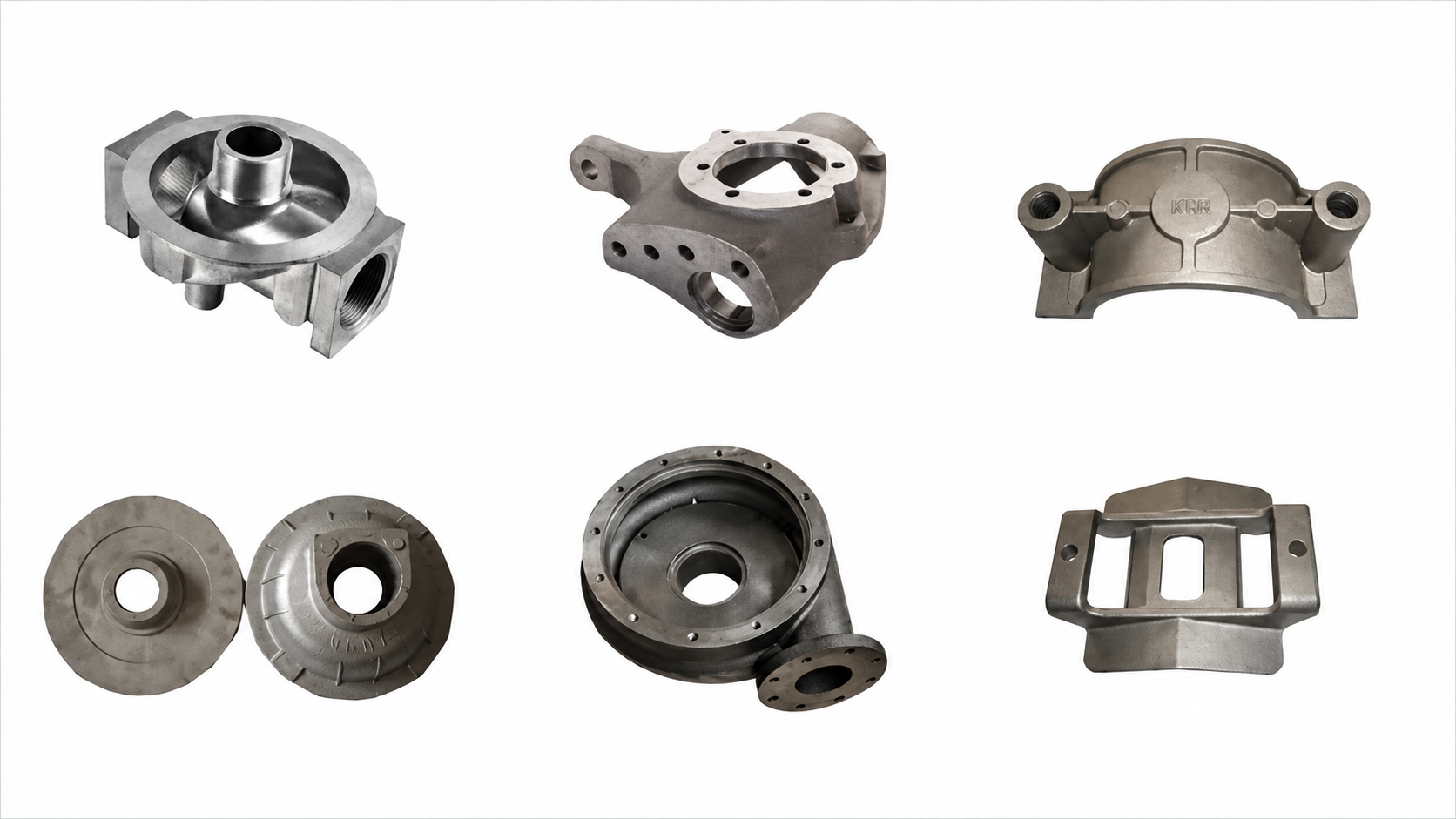
Sand casting is one of the oldest and most widely used metal casting processes in which molten metal is poured into a sand mold cavity to produce components of various sizes and complexities. The process begins with pattern making, where a replica of the final component is created using wood, metal, or plastic. This pattern is used to form the mold cavity in specially prepared molding sand mixed with binders and additives to achieve required strength and permeability.
Once the pattern is placed in a molding box (flask), sand is packed around it to form the mold. After pattern removal, gating and riser systems are created to ensure proper metal flow and feeding during solidification. In many cases, cores made of sand are inserted into the mold to create internal cavities or hollow sections in the casting. The mold is then closed and prepared for pouring.
Molten metal is poured into the sand mold cavity through the gating system under controlled conditions. After solidification and cooling, the sand mold is broken (shakeout process) to remove the casting. The casting is then cleaned by removing sand particles, runners, and risers. Final operations such as fettling, grinding, heat treatment, and machining are performed to achieve required dimensional accuracy and surface finish.
Sand casting is highly versatile and suitable for producing both simple and complex components ranging from small parts to very large industrial castings. It is widely used due to its low cost, flexibility, and ability to cast almost all engineering metals and alloys.
| Component Weight | from 100 gms. to 5 MT |
| Dimensionally | up to 750 mm length |
| Surface roughness | as per the requirements |