Forged Components
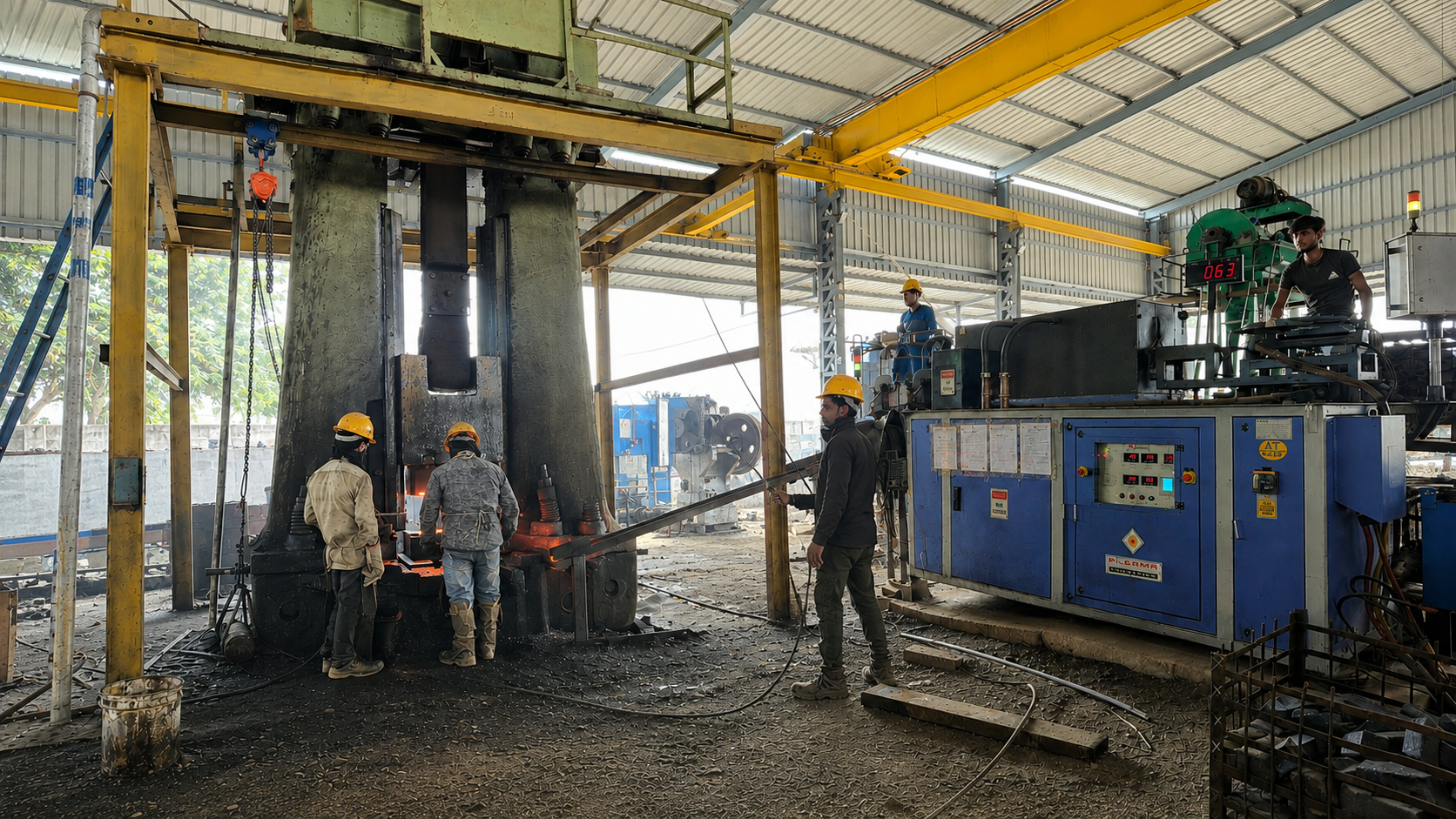
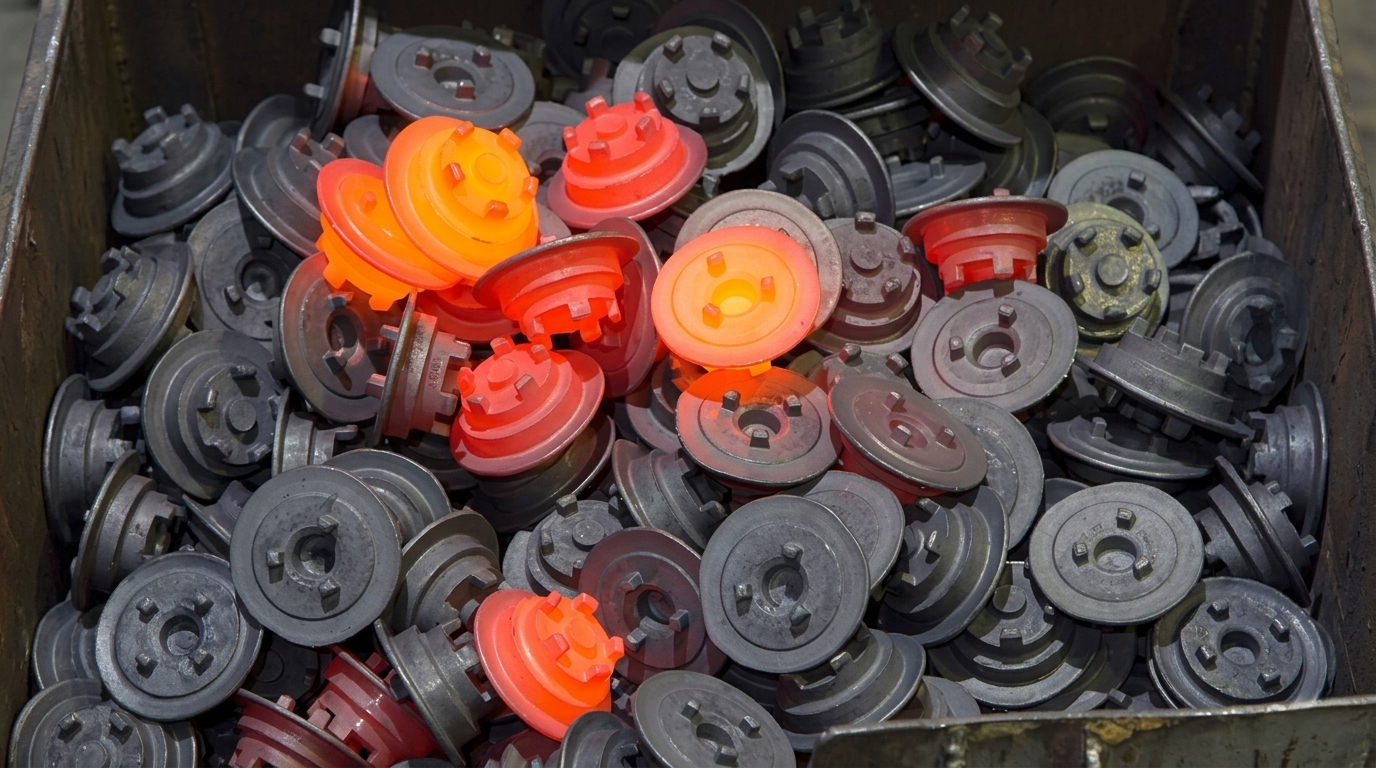
Forging is a manufacturing process in which metal is shaped using compressive forces applied through hammering, pressing, or rolling. The process begins with selection and cutting of raw material such as billets, bars, or ingots according to required size. The material is then heated to a specific forging temperature (hot forging) or processed at room temperature (cold forging) depending on the application and material grade.
Once the material reaches the required forging temperature and ductile condition, it is placed between dies and shaped using mechanical or hydraulic presses or hammers. Various forging processes such as open die forging, closed die forging (impression die forging), drop forging, press forging, upset forging, roll forging, ring rolling, and precision forging are used depending on the component requirements. The metal flows plastically and takes the shape of the die cavity, resulting in improved grain structure and mechanical strength. Multiple forging operations including upsetting, drawing out, fullering, edging, bending, punching, piercing, trimming, and finishing may be performed to achieve the final geometry.
After forging, the components undergo trimming to remove flash, followed by heat treatment processes such as normalizing, quenching, or tempering to achieve desired hardness and strength. Final operations include machining, grinding, shot blasting, and surface finishing to meet dimensional and functional requirements.
Forging produces components with superior strength, toughness, and fatigue resistance compared to other manufacturing processes. It is widely used for high-stress applications where reliability and durability are critical.
| Component Weight | up to 100 kg single Pcs |
| Material | Carbon Steel, Stainless steel And Alloy Steel up to 10 kg per Pcs |
| Brass forging | up to 1200 gms |