Die Cast Components
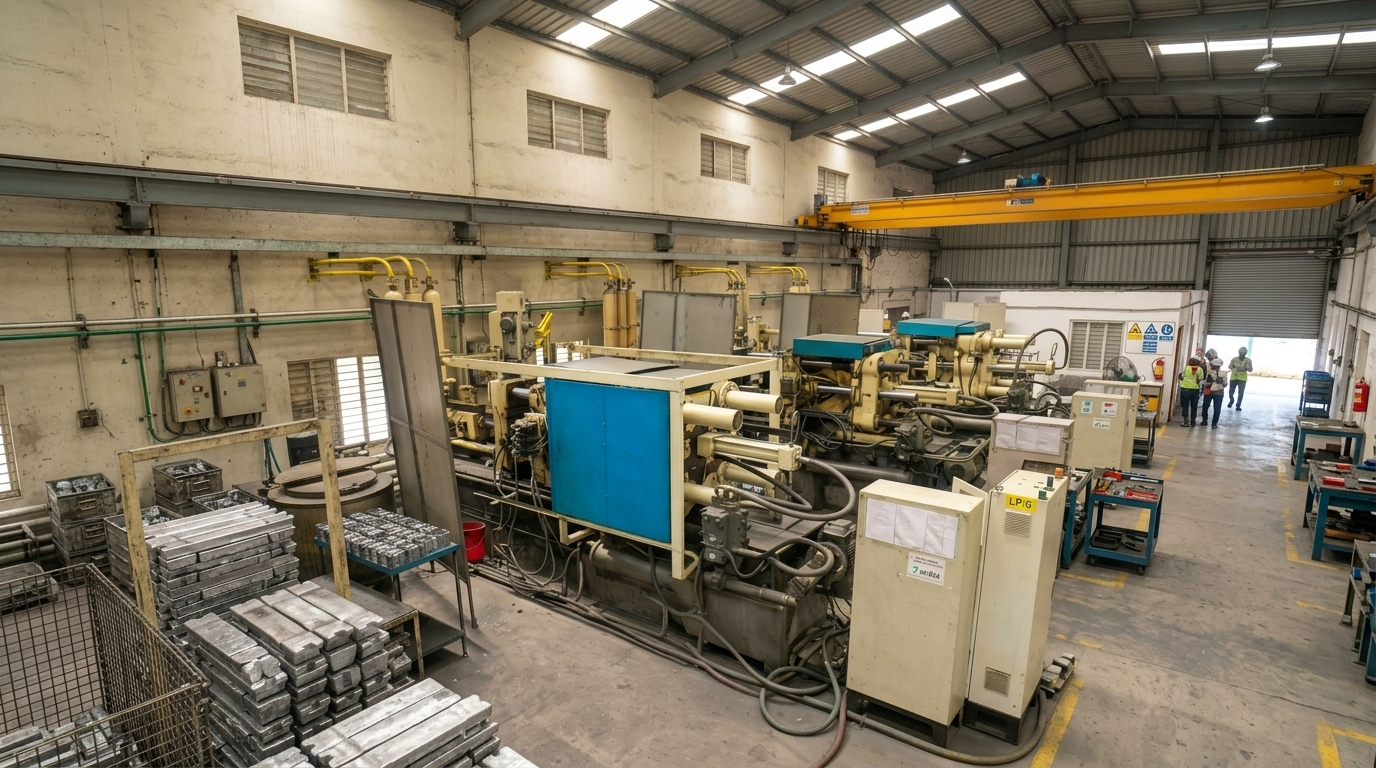
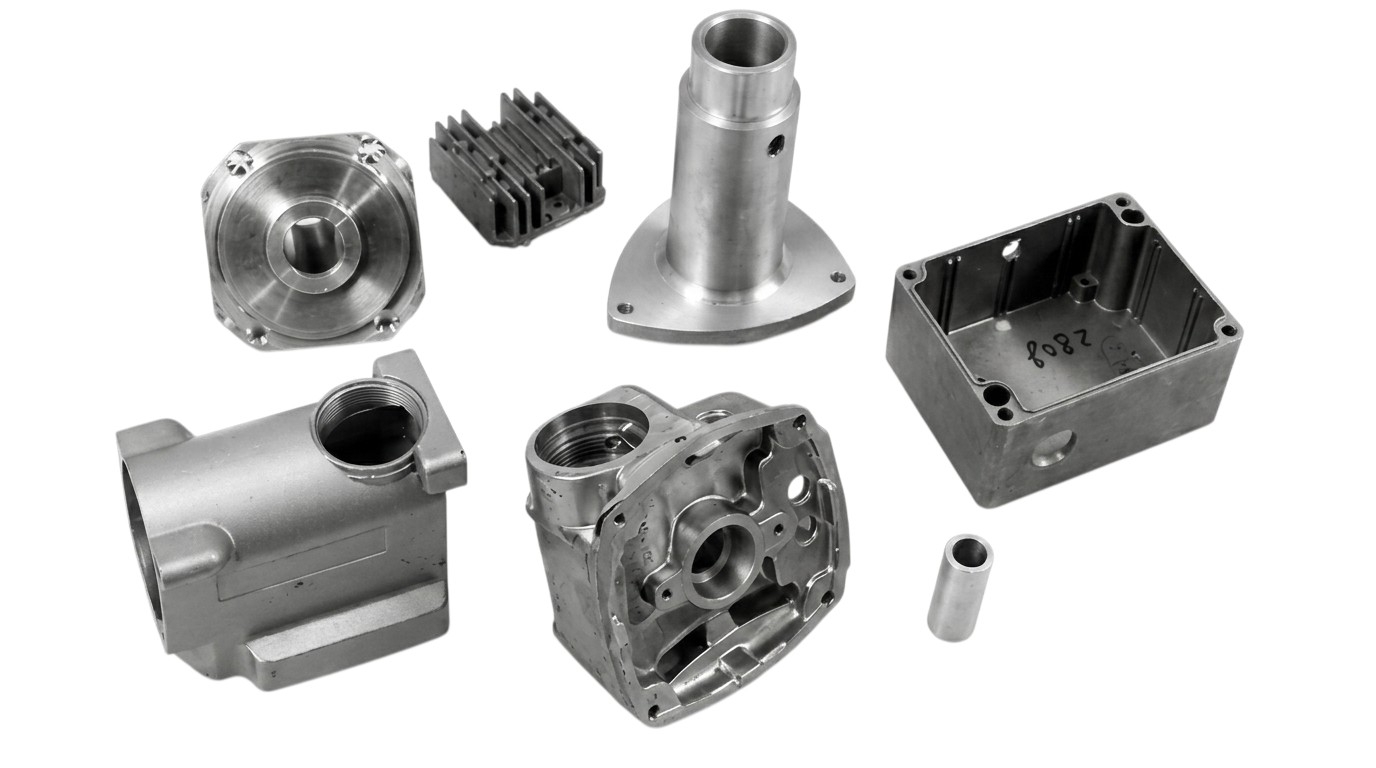
Die casting is a precision metal forming process in which molten metal is injected into a hardened steel mold (die) under high pressure to produce complex and dimensionally accurate components. The process starts with die preparation, preheating, and application of lubricant to ensure smooth metal flow and easy ejection. Based on the material and component requirement, the die is mounted on either a hot chamber or cold chamber die casting machine.
Once the setup is ready, molten metal is injected into the die cavity at high pressure, allowing it to fill intricate geometries with excellent accuracy. The metal is then cooled and solidified under controlled conditions to achieve required strength and stability. After solidification, the die opens and the component is ejected, followed by trimming and removal of excess material.
Different die casting methods such as hot chamber, cold chamber, gravity, vacuum, and pressure die casting are used depending on alloy type, production volume, and performance requirements. Each method is optimized to achieve specific mechanical properties, surface finish, and production efficiency.
Die cast components provide excellent dimensional accuracy, smooth surface finish, and high repeatability in mass production. The process enables thin-walled and complex shapes with minimal machining requirement.
| Component | Aluminum Weight up to 400 Ton |
| Component | Zinc Weight up to 150 Ton |
| Surface roughness | as per the requirements |