Rubber Components
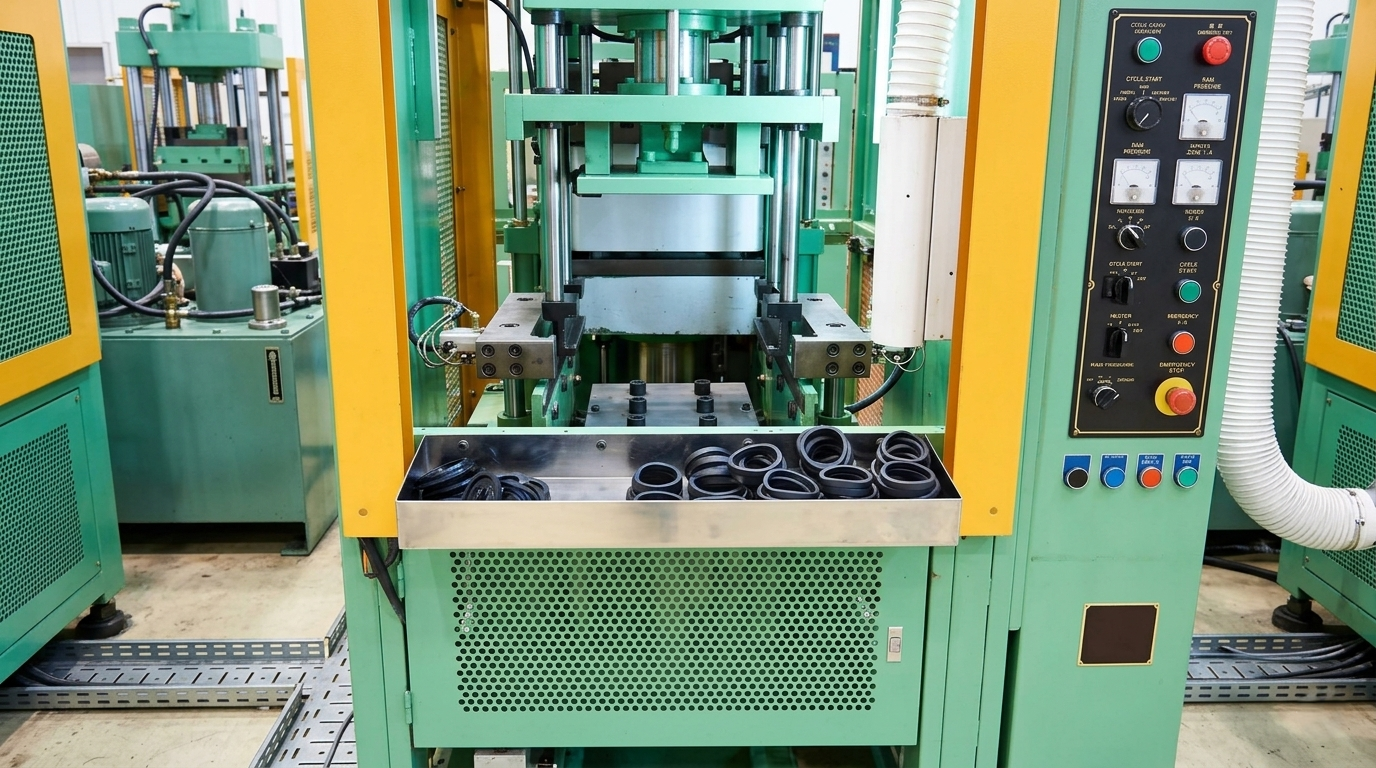
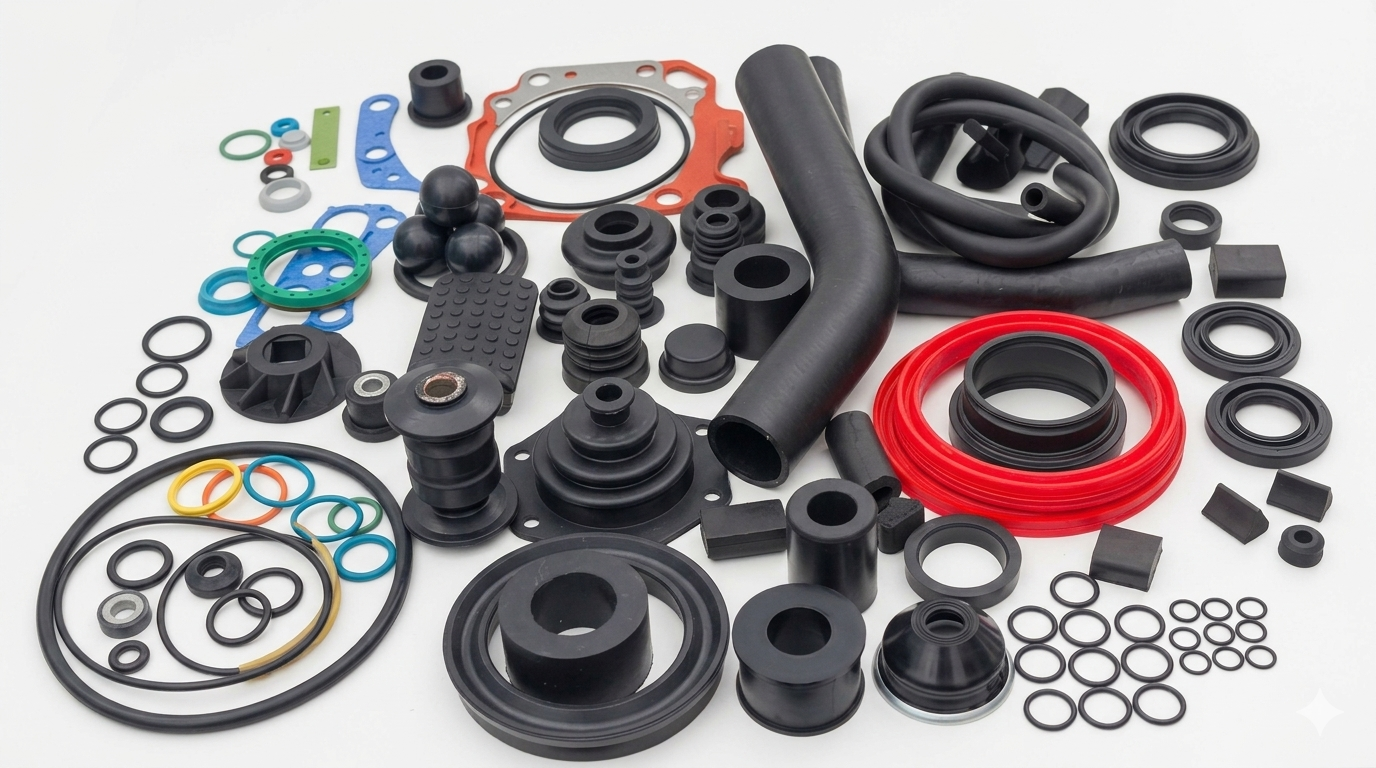
Rubber manufacturing involves processing natural or synthetic rubber compounds into finished engineering components using molding processes such as compression molding, injection molding, and transfer molding.
The process begins with selection and preparation of rubber compound based on required hardness, elasticity, and application properties. The compound is mixed with additives such as fillers, curing agents, and stabilizers to achieve desired performance characteristics.
Once prepared, the material is shaped inside a heated mold cavity under controlled temperature and pressure. The rubber is cured or vulcanized during molding, improving elasticity, strength, and resistance to wear, heat, and chemicals. Components are then trimmed and inspected for dimensional stability and performance.
| Component Size | Small precision seals to large molded rubber parts |
| Production Capacity | Prototype, batch, and mass production |
| Surface roughness | as per the requirements |